A budget should guide the month, not only report the past.
Start with a monthly plan. The app can add expected recurring items and point out what still needs attention, but only you mark a bill paid.
Bank data supports the monthly plan.
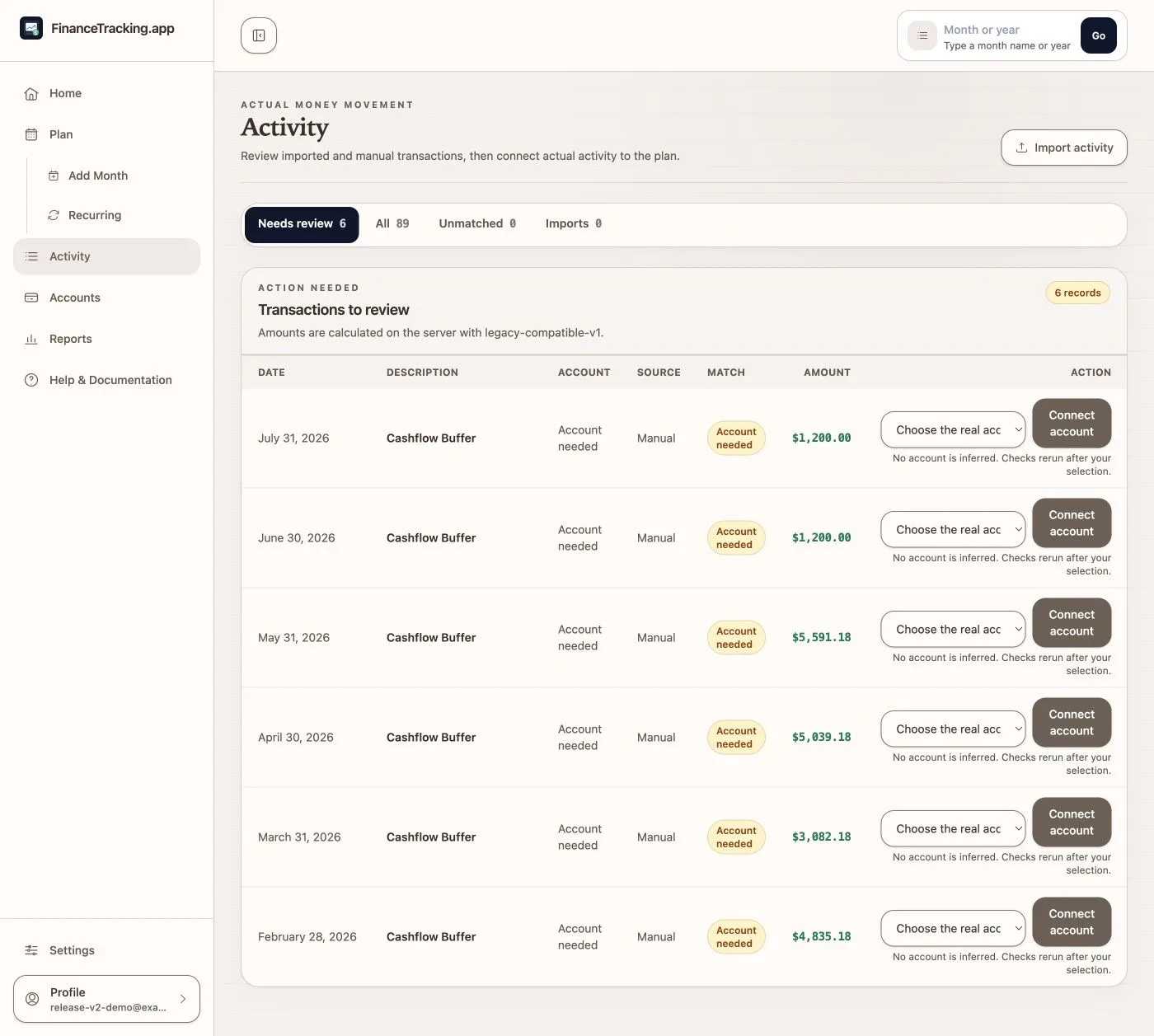
The app began with manual entry and CSV imports. You can now optionally connect SimpleFIN for read-only balances and reviewed activity. Bank sign-in happens at SimpleFIN; the app keeps an encrypted access credential on your server. You still need to secure the host, account access, and backups described in the trust center.
Manual does not have to mean repetitive.
Save recurring income and bills, copy a useful month, and review imported rows before adding them. Spend less time rebuilding the plan while staying in control of payment status and corrections.
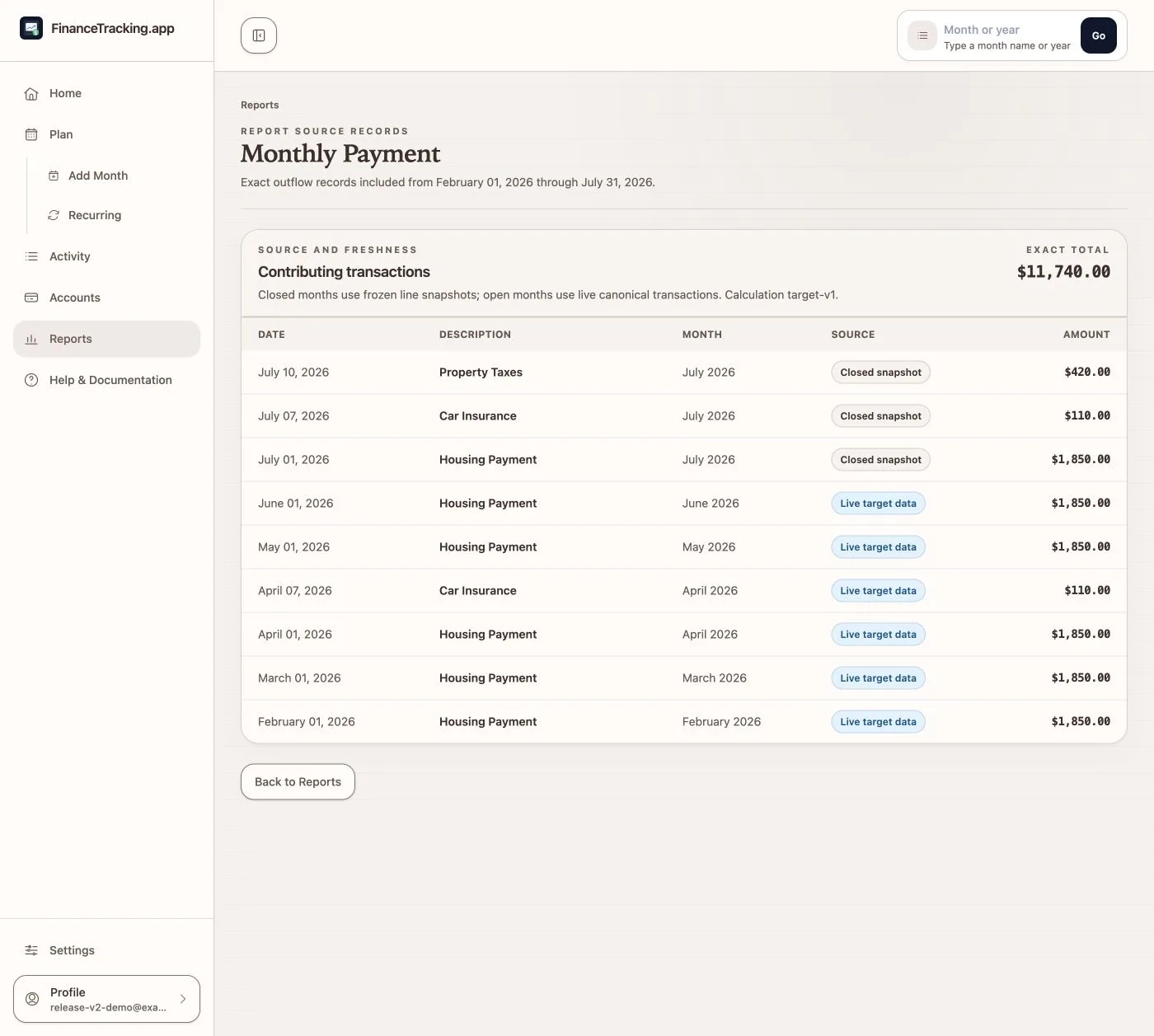
Every total should show the transactions behind it.
Open any attention count, balance change, chart value, or report total to see the transactions behind it. Review imports and restores before they make changes so mistakes are easier to catch.
A finished month should keep its meaning.
Close only when everything is accounted for. The app keeps the totals and transactions you reviewed; reopen the month if you need to add a late change.
Self-hosting means taking responsibility.
You choose where the app runs and when it updates, and you are responsible for security and recovery. The PolyForm Noncommercial license permits noncommercial use, modification, and redistribution; commercial use needs separate permission.
The app is for a specific kind of budgeter.
Use FinanceTracking.app when you want a monthly review you can inspect and you are comfortable running the server. Choose another product when automatic bank updates, a service managed for you, shared household editing, or native mobile apps matter more.