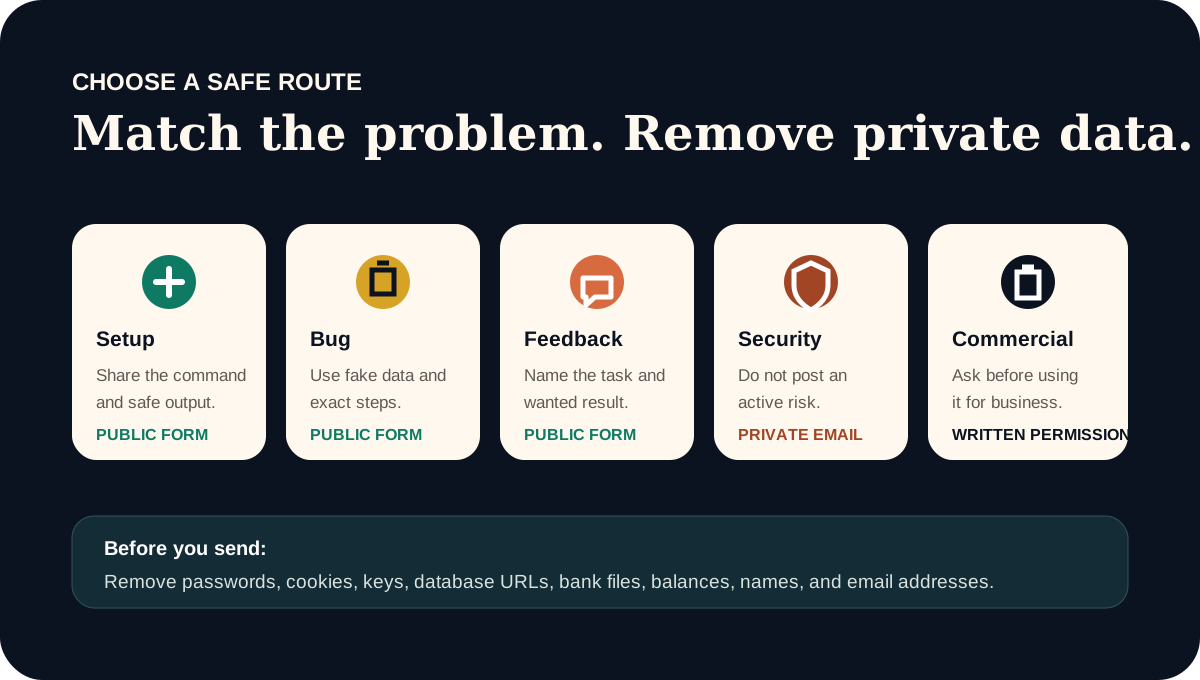
Choose the support route that matches the problem.
Start with the documentation. If you still need help, share only the details needed to recreate the problem and replace private information with made-up examples.
Share enough to help without sharing private data.
Include
The app version and Docker image tag, if you use one.
Your operating system, processor type, Docker version, and browser when they matter.
How you installed the app and configuration names with secret values removed.
The steps you took, what you expected, what happened, and a short relevant log excerpt.
Made-up examples that reproduce the same problem.
Never include publicly
Passwords, cookies, Rails credentials, private keys, or database URLs.
Complete environment files, database dumps, or infrastructure snapshots.
Bank exports, real transaction descriptions, balances, email addresses, or account names.
A security proof of concept that could put active installations at risk.
What support covers
Know what the maintainer can reasonably help with.
Good reasons to ask
A problem in the current stable app.
A problem following the documented local or production Docker setup.
A problem using the published Docker image or an unchanged source checkout.
Missing instructions or a budgeting task that is harder than it should be.
Outside the normal boundary
Operating a user's server or guaranteeing uptime and recovery.
Every reverse proxy, custom fork, or institution-specific CSV variation.
Recovering from an untested or incomplete infrastructure backup.
Accounting, tax, legal, investment, or personal financial advice.
No service-level agreementFinanceTracking.app is a maintainer-led project. Public and private requests are handled as capacity allows, without guaranteed response or resolution times.
Not sure whether the problem is in the app or the server?
The trust center explains what the app handles, which outside services it contacts, and what remains your responsibility when you self-host.