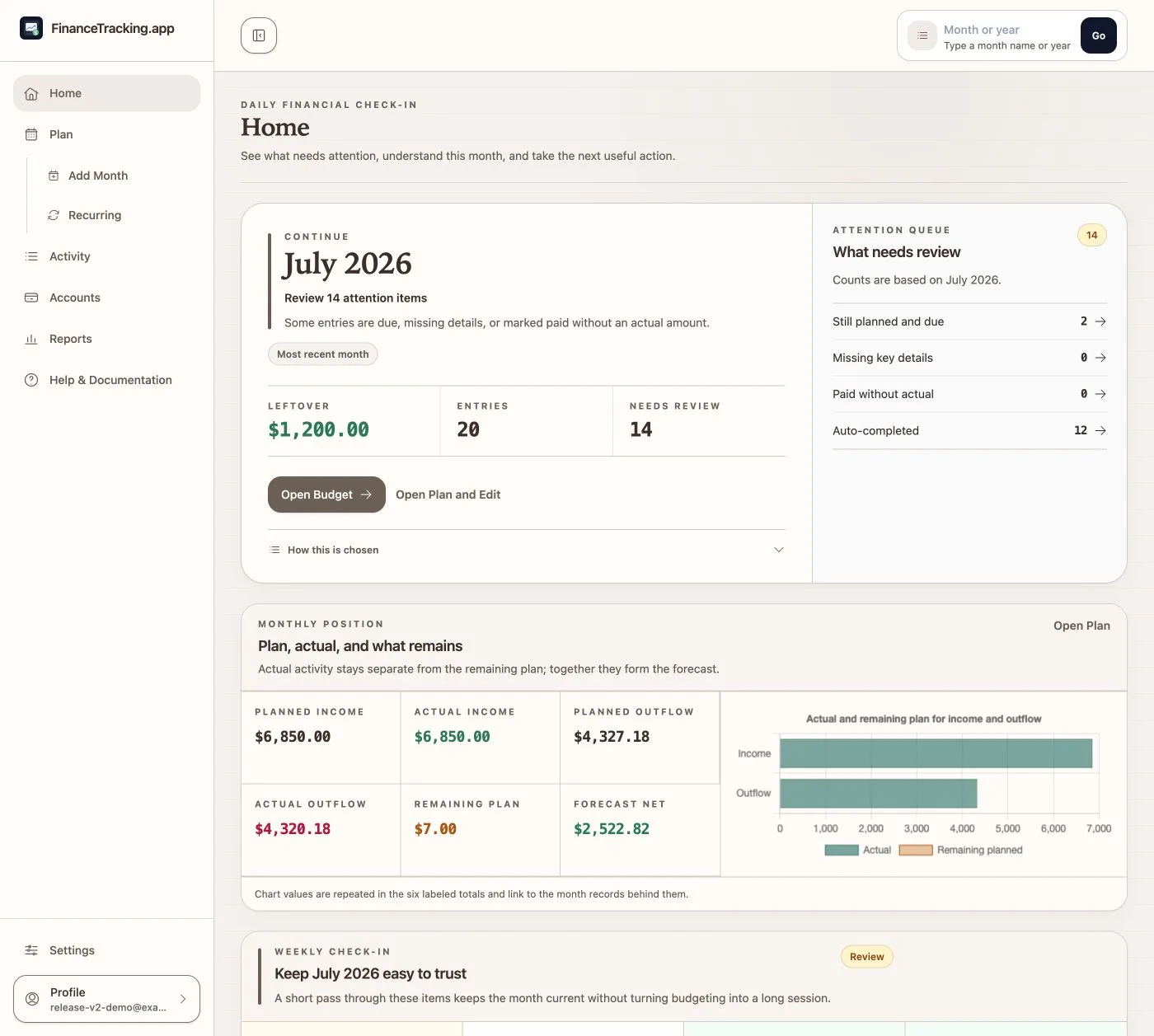
Automatic tracking and hands-on review solve different problems.
Choose automatic transaction tracking when convenience matters most. Choose manual review when noticing and confirming transactions is part of how you stay on track.
1. Prepare the month from what usually repeats
Generate recurring income, bills, subscriptions, payment plans, and card payments, or clone a similar month. Remove old items and add the one-time changes.
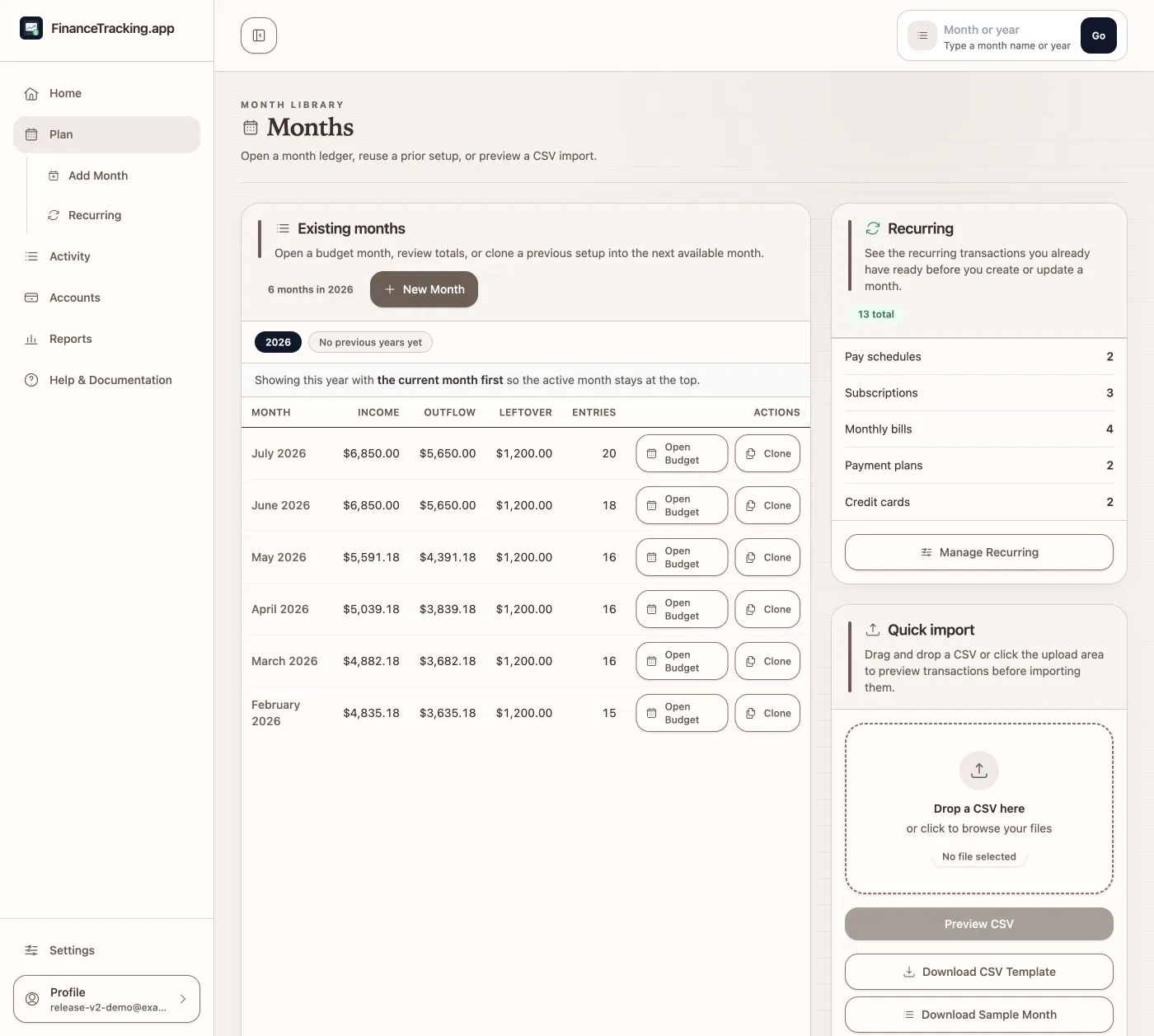
2. Record what actually happened
Enter a transaction by hand or preview a CSV file before importing it. Match Activity to the plan item it fulfills without losing the original plan.
3. Review what needs attention
Open items that are due, incomplete, unmatched, or missing actual amounts. Use filters to narrow the transaction list instead of rereading everything.
4. Understand the difference
Check account balances, then compare the plan, actual spending, forecast, trends, and categories in Reports. Use charts to spot patterns and open the transactions behind a total when you want to verify it.
5. Close the month when the numbers look right
Finish the items that still need attention and review the totals you are about to save. If a later transaction requires a correction, reopen the month and close it again afterward.
6. Keep a recovery path
Export an encrypted backup. If you self-host, keep a PostgreSQL backup too. Preview every restore, and verify that you can recover before relying on it.
A simple review checklist
- Are all expected income and fixed bills present?
- Which due plan items still need confirmation?
- Which Activity transactions are unmatched or still waiting for review?
- Do account balances and report totals lead back to the transactions you expect?
- Are you ready to save the final month totals?
- Can you restore the database and application backups you are depending on?
When this approach is the wrong fit
Choose an automatic service when automatic transaction tracking, native mobile apps, or shared household editing matters more than self-hosting and manual confirmation. Manual-first budgeting should be an intentional preference, not a moral test.